
Sell a Fire- or Flood-Damaged House in Charlotte, NC for Cash
Sell a fire-, water-, or flood-damaged Charlotte house as-is for cash. Mecklenburg flood maps, NC disclosures, buyouts & open claims. Call (405) 622-8705.
Short answer: Yes, you can sell a fire-, water- or flood-damaged house in Charlotte as-is, even while the insurance claim is still open. The two things that decide how much you walk away with are who keeps the insurance money, which has to be spelled out in the contract, and whether repairing first would truly pay you back after permits, contractor delays, and months of carrying a damaged house. If the house sits in a mapped floodplain, check whether a Mecklenburg County buyout could pay you more before you take any investor’s offer, including ours.


Here’s a typical case. A 1960s brick ranch off Albemarle Road in east Charlotte has a grease fire in the kitchen. Charlotte Fire Department knocks it down quickly, but the water from the hoses soaks the hardwood floors, runs through the subfloor, and pools in the red-clay crawl space under the house. Two weeks later the whole house smells of smoke and wet insulation. The owner is staying with her daughter in Matthews. The adjuster has been out once, the check will be made out to her and her mortgage company, and a restoration company is pressing her to sign paperwork. She isn’t sure she wants to spend a year rebuilding a house she was already thinking about leaving.
This guide is for her, and for anyone in Charlotte with a house that burned, flooded, or had a pipe burst inside a wall. HomeCashOffer buys these houses as-is, and we’ll say plainly when repairing or a government buyout is the better move. For an overview of selling anywhere in the area, see Sell my house fast in Charlotte & Raleigh and our Charlotte cash buyer page.
Disclaimer: This is general information, not legal, tax, or insurance advice. Policies differ, and North Carolina law and local rules change. Confirm anything that matters with a North Carolina attorney, your insurance agent, and the County or City office involved.
What should I do in the first few weeks after a fire or flood in Charlotte?
Before you decide whether to sell, protect the house and the claim.
- Secure the house, and register it if you board it. Charlotte’s city code requires an owner to register a boarded-up residential structure with the City within 48 hours of boarding it. That registration lasts six months and can’t be renewed, so a burned house can’t stay boarded up and ignored forever.
- Give your insurer written notice, and stop more damage. North Carolina’s standard fire policy, the baseline written into G.S. 58-44-16, requires immediate written notice of a loss, steps to protect the property from further damage, and an inventory of what was damaged. Tarping a roof or running fans is part of that.
- Watch the 60-day proof-of-loss window. The same standard policy says the insured must give the insurer a sworn proof of loss within 60 days after the loss, unless the insurer extends that in writing. Your policy’s wording controls, so read it or ask your agent, and get any extension in writing.
- Read before you sign anything from a contractor. Some restoration companies ask for an assignment of benefits or a direction to pay, which can send your insurance money straight to them. In North Carolina, a contractor needs a general contractor license for a project costing $40,000 or more, so a full fire rebuild usually requires a licensed general contractor. You can look up a license with the North Carolina Licensing Board for General Contractors.
- Keep everything. The fire report, the adjuster’s estimate, photos taken before cleanup, and every letter will be asked for later.
Fix it or sell it as-is: how do Charlotte owners decide?
How bad is it really? Smoke damage confined to one room is a cleaning and paint job. A fire that burned into the attic, or firefighting water that sat in a crawl space, is a different project. Charlotte has a lot of older houses on crawl spaces, from the early-1900s mill houses in NoDa, Optimist Park, and Villa Heights to postwar brick ranches across west and east Charlotte. Red clay holds moisture, so when water gets under one of these houses it often leads to rotted sill plates, sagging floor joists, and mold, sometimes weeks after the floors looked dry.
Who will do the work, and when? Structural, electrical, plumbing, mechanical, and roofing work generally needs permits from Mecklenburg County Code Enforcement, the County agency that issues building permits for Charlotte, through its online AccelaMeck portal. A house with burned wiring needs an electrician, inspections, and often new drywall, insulation, and HVAC ducts that held smoke. If you’re living somewhere else while the work happens, you’re managing it all from a distance.
What does the insurance actually pay? Many policies pay actual cash value first and the rest of the replacement cost only after repairs are done. If you sell before repairing, you may never collect that holdback, so ask your adjuster exactly how your policy handles it before you sign a contract with anyone.
What does it cost to hold the house while you decide? The mortgage, taxes, and insurance keep coming, and insurance is climbing. Under the 2025 settlement between Insurance Commissioner Mike Causey and the North Carolina Rate Bureau, average homeowners base rates rose 7.5% statewide on June 1, 2025, and another 7.5% on June 1, 2026, and the News & Observer reported Mecklenburg County’s averages at 9.3% and 9.2%. Your own premium depends on your insurer and house.
If the house is mostly sound, the insurance covers a real rebuild, and you plan to keep it or sell it at full retail, repairing usually wins. If the damage is structural, the claim is short, or you simply don’t want to manage a rebuild, an as-is sale is worth pricing. For a deeper comparison, see Sell as-is vs. fixing up.
Can I sell my Charlotte house while the insurance claim is still open?
Yes. You can sell at any stage of the claim, but the contract needs to say who gets the money.
- You keep the claim. You sell the house as it stands, the buyer prices it as damaged, and you keep collecting from your insurer after closing. This often works when the insurer has already agreed on most of the payment.
- You assign the claim to the buyer. The buyer takes over the remaining claim rights, and the price reflects that. Some policies limit assignment, so check yours and have your closing attorney review it.
If there’s a mortgage, insurers usually make the check payable to both you and the lender, and the lender may release the money in stages as repairs are done. When the house sells and the loan is paid off at closing, that changes. Tell your lender and your North Carolina closing attorney about the claim at the start so the checks don’t get stuck.
Two more North Carolina rules are worth knowing if you and the insurer disagree on the amount. First, the standard policy has an appraisal clause. If you and the insurer can’t agree on the amount of the loss, either side can demand appraisal in writing, each side picks an appraiser within 20 days, and an umpire settles the differences. Second, the clock for suing is three years from the date of the loss and it runs from the damage itself, not from a later denial. If a hurricane or other declared catastrophe caused the damage, a public adjuster licensed by the North Carolina Department of Insurance can’t charge more than 10% of the settlement or take any fee before the claim settles.
What do I have to tell a buyer about fire or water damage in North Carolina?
Most North Carolina sellers must give the buyer the Real Estate Commission’s Residential Property and Owners’ Association Disclosure Statement before an offer, under Chapter 47E of the General Statutes. You answer each question Yes, No, No Representation, or Not Applicable.
Read the form’s own warning before leaning on “No Representation”: a seller is not required to disclose items that have an NR option, but failure to disclose latent (hidden) defects may still result in civil liability. A brokerage listing your house also has its own duty to disclose material facts. Smoke residue sealed behind new paint, or water damage hidden under new flooring, is the kind of thing that turns into a dispute after closing.
Since July 1, 2024, the form has also included flood questions. It asks whether the house is in a flood hazard zone, whether it has had damage from flooding or pooled water caused by a natural event like heavy rain, whether you’ve filed a flood insurance claim (including with the National Flood Insurance Program), whether there’s a current flood policy, whether you received FEMA, SBA, or other federal flood assistance, and whether there’s an elevation certificate. Gather those answers early. A personal representative selling an estate’s house is one of the exemptions in G.S. 47E-2, but most owner-occupants aren’t exempt.
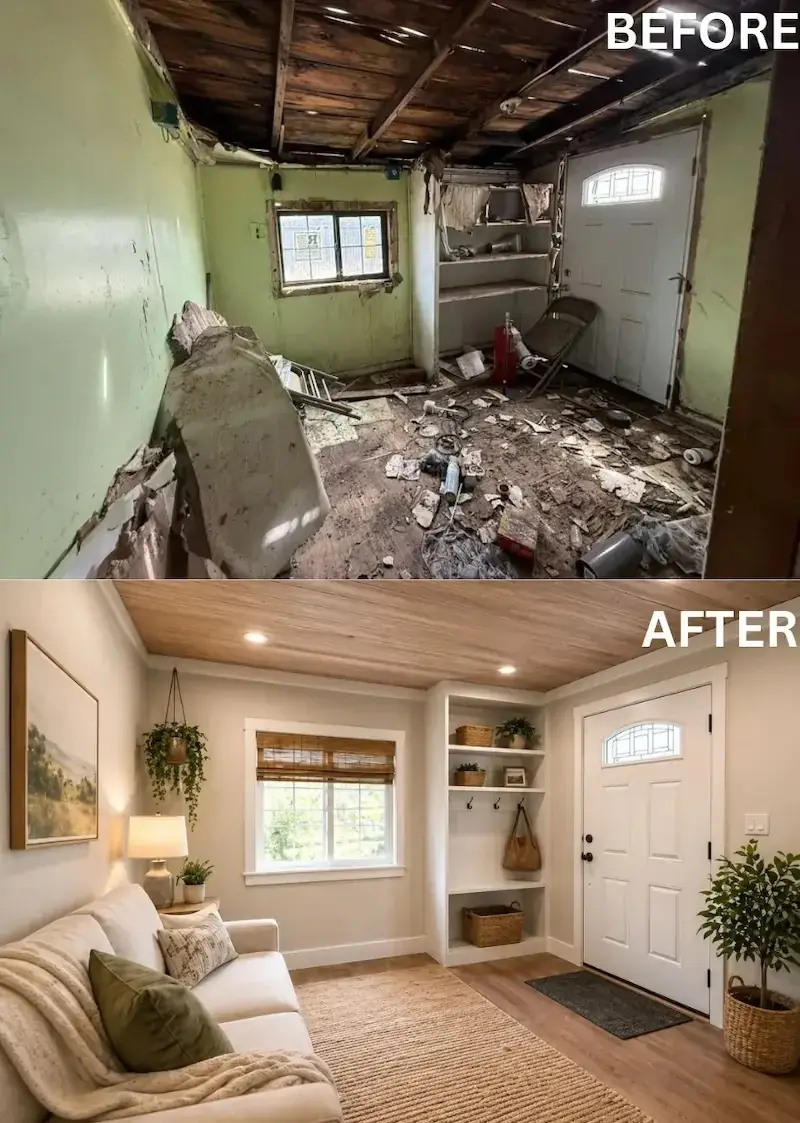
How do you sell a flood-damaged house in Charlotte, NC?
Short answer: Find out whether the house is in a mapped floodplain, file any flood insurance claim, and answer the flood questions on the North Carolina disclosure form honestly. Then compare three numbers: a repair-and-list estimate, an as-is cash offer, and (if you qualify) a Mecklenburg County floodplain buyout. HomeCashOffer buys flood-damaged Charlotte houses as they sit, wet drywall and all, but a buyout or an insured rebuild sometimes pays more.
Check both of Charlotte’s flood maps. Charlotte-Mecklenburg Storm Water Services says that in 2000 it became the first community in the nation to show two floodplains on its official maps: the FEMA Floodplain, where flooding is likely now, and the Community Floodplain, where flooding is likely in the future as land upstream is developed. Both are regulated. Storm Water Services counts about 2,700 homes and businesses in the regulated floodplain. You can look up an address on the County’s 3D Floodzone map or in Polaris 3G. Remember that flooding also happens outside mapped floodplains, from flash flooding on small creeks, a backed-up storm drain, or water running into a basement or crawl space.
Your homeowners policy probably doesn’t cover it. Standard homeowners policies exclude flood damage, so a flooded Charlotte house is usually paid for, if at all, by a separate National Flood Insurance Program or private flood policy. If you have NFIP coverage and the County finds the house substantially damaged, FEMA’s Increased Cost of Compliance coverage can pay up to $30,000 toward elevating, relocating or demolishing it, on top of the regular building claim, as long as the total doesn’t exceed the policy’s building limit. ICC money is tied to the work being done, so ask your adjuster how a sale would affect it before you sign a contract.
Why flood damage cuts the retail price. A financed buyer’s lender looks at the flood zone, and federally backed loans on houses in a FEMA Special Flood Hazard Area require flood insurance, which adds to the buyer’s monthly cost. Visible water damage, mold, or an open substantial-damage determination also tends to stop an FHA or conventional appraisal until repairs are done. A cash buyer doesn’t have those loan conditions, which is the main reason flooded houses often end up with investors. It’s also why the as-is price is lower.
What to have ready. Your flood claim number and adjuster’s estimate, the date the water came in and how high it reached, photos taken before cleanup, any substantial-damage letter from the County, any FEMA or SBA assistance you received (the disclosure form asks), and an elevation certificate if you have one. The more of this a buyer can see, the less it has to guess, and guessing tends to lower offers.
Is my Charlotte house in a floodplain, and does that change the math?
It can. Mecklenburg’s own Storm Water Services says many local homes were built in floodplains that are meant to flood.
If a building in the regulated floodplain is substantially damaged, a determination made by Mecklenburg’s floodplain administrator, rebuilding generally has to bring it up to floodplain rules. Under the National Flood Insurance Program, that test is damage costing 50% or more of the building’s market value to restore. That can mean elevating the house, not just replacing drywall.
Here’s the other side of it. Charlotte-Mecklenburg Storm Water Services has run a voluntary floodplain buyout program since 1999, buying flood-prone houses, removing them, and turning the land into open space. After Hurricane Helene flooded homes near Mountain Island Lake in September 2024, the County offered buyouts and retrofit grants for substantially damaged single-family homes in the flood hazard area. When a buyout is funded through FEMA’s Hazard Mitigation Grant Program, Mecklenburg says it pays 100% of the pre-disaster fair market value, set by an independent appraiser, subject to conditions such as no duplication of benefits. That can be more than any investor will pay for a flooded house. The tradeoff is time, paperwork, and limited funding, so ask Storm Water Services about your address before signing with a private buyer.
Can the City of Charlotte make me tear down a burned house?
It can, after a process. Charlotte’s Minimum Housing Code sets baseline health and safety standards, and the City’s Code Enforcement division handles it. After a complaint, the City says an inspector will request an inspection within three business days. Tenants can call 311, and neighbors who don’t live in the house need a petition signed by five adult Charlotte residents.
Based on the estimated cost of repairs, the inspector orders the owner either to repair or to demolish the structure. If demolition is ordered, the owner still gets an opportunity to make repairs, and there are hearings with notice. If an owner doesn’t comply, Chapter 11 of the City code lets the City do the repair, closing, or demolition itself, and that cost becomes a lien on the property. If you’ve received an order, deal with it or sell before the deadline. We can buy a house with an open order, but tell us about it up front.
Can the fire restoration contractor put a lien on my Charlotte house?
Short answer: Yes, if the bill goes unpaid. In North Carolina a contractor or supplier who worked on the house can file a claim of lien with the Clerk of Superior Court in the county where the property sits, which for a Charlotte house is Mecklenburg County, but it has to file no later than 120 days after the last day it furnished labor or materials at the site (G.S. 44A-12).
This catches people after a fire because the board-up crew, the water extraction company and the tear-out contractor often start work before the insurer agrees on the scope. If the claim stalls and an invoice sits unpaid, that lien can surface in the title search when you go to sell. Because it is filed with the clerk and indexed on the judgment docket under the owner’s name, not recorded with the Register of Deeds like a deed of trust, a quick look at your recorded documents won’t show it. When you pay a contractor, get the final invoice and a signed lien waiver. If a bill is in dispute, tell the closing attorney (and us) early so it can be paid or resolved out of the proceeds. This is general information, not legal advice.
Is the insurance money taxable if I sell the burned Charlotte house instead of rebuilding?
Short answer: Usually not on its own, but it changes your numbers. The IRS treats a home destroyed by fire and paid for by insurance as a sale, so you may be able to exclude the gain just as you would on a normal home sale, and any insurance payments for the damage reduce your basis in the house (IRS Publication 523).
For most Charlotte owners who lived in the house for at least two of the last five years, the federal exclusion of up to $250,000 of gain, or $500,000 for most married couples filing jointly, covers both the insurance money and a later sale of the damaged house. If you haven’t lived there two years, Publication 523 lists a home destroyed or damaged by a casualty as an unforeseeable event that can qualify you for a partial exclusion. Rentals and inherited houses follow different rules, and IRS Publication 547 covers casualty gains in more detail. Keep the claim paperwork, the adjuster’s estimate and every check stub together for your tax preparer. This is general information, not tax advice.
How do the numbers compare?
Without your actual estimate and offer, any number we gave would be made up, so here’s how to compare them. What you keep from a repair-then-list sale is the after-repair price, minus the mortgage payoff, minus whatever the repairs cost beyond what insurance pays, minus months of mortgage, taxes, insurance, and utilities while the work gets done, minus the listing commission and closing costs, minus North Carolina’s excise tax on the deed. That tax is $1 per $500 of the sale price, and the seller pays it.
What you keep from an as-is sale is the cash price, minus the mortgage payoff, minus the excise tax and your closing costs, plus whatever insurance money you keep under the contract. Compare the two, and count the months the first option takes. More on this: Cash offer vs. listing with an agent and What to expect from a cash offer.
When should you not sell a damaged Charlotte house for cash?
- The damage is cosmetic and insurance is paying for it. Smoke cleaning and paint in a Plaza Midwood bungalow shouldn’t turn into an as-is discount.
- You qualify for a floodplain buyout. A buyout at pre-disaster fair market value usually beats any investor, if you can wait for it.
- You’d lose a large replacement-cost holdback. Get the number from your adjuster first, then decide.
- You want to stay, and the rebuild is fully funded. Selling a house you love because the process is stressful is a decision you can’t take back.
Related reading: how carrying costs add up on an empty house and how buyers price major repairs.
How a HomeCashOffer purchase works for a damaged Charlotte house
- Reach us at (405) 622-8705 or through the cash offer form, and tell us what happened, when, and where the claim stands. Photos help, but you don’t need to clean up first.
- We walk the house as it is, including the crawl space and attic, and give you a written offer that says whether it assumes you keep the claim or assign it.
- If you accept, a North Carolina closing attorney checks title, gets the mortgage payoff, and handles any City liens or open orders.
- You choose the closing date. With clear title, some closings happen in as little as 7 days.
An offer is free, and you’re free to say no. Statewide information is on our North Carolina page.
For how Louisiana handles the same problem, including New Orleans’ 50% substantial-damage rule and historic-district review, see our New Orleans fire- or water-damage guide.
HomeCashOffer, 3000 W Memorial Rd, Ste 123 Unit 308, Oklahoma City, OK 73120. Phone: (405) 622-8705.
Sell your house fast in these markets
Local cash offer pages—or start with a nationwide request.
Frequently asked questions
Can I sell a flood-damaged house in Charlotte, NC as-is?
Yes. You can sell a flood-damaged Charlotte house as-is for cash, without drying it out or rebuilding first. You still answer the flood questions on North Carolina's disclosure form, and if the house is in Mecklenburg's regulated floodplain and was substantially damaged, rebuilding has to meet floodplain rules, which is why buyers price that in. Check whether a County floodplain buyout or your flood policy's Increased Cost of Compliance coverage (up to $30,000) would pay you more first.
Can I sell my Charlotte house before the fire insurance claim is settled?
Yes. An open claim does not stop a sale. What matters is who keeps the claim money, and that should be written into the purchase contract. The usual choices are that you keep the claim and the buyer pays a price for the house as it sits, or you assign the claim to the buyer and the price goes up to reflect it. If there is a mortgage, the lender is usually named on the insurance check, so tell your closing attorney about the claim early.
How long do I have to file a lawsuit over a denied or underpaid property claim in North Carolina?
North Carolina's standard fire insurance policy, set out in G.S. 58-44-16, says suit must be started within three years after the inception of the loss. North Carolina courts have applied that period to homeowners policies and to non-fire losses such as wind and lightning, and the clock runs from the date of the damage, not the date the insurer denies the claim. Talk to a North Carolina attorney well before that date if your claim is stuck.
Do I have to tell a buyer that my house had a fire or water damage?
North Carolina sellers of most houses must give buyers the Residential Property and Owners' Association Disclosure Statement before an offer. Many questions allow a No Representation answer, but the form itself warns that failing to disclose latent (hidden) defects can still lead to civil liability, and a broker has separate duties to disclose material facts. The current form also asks about flood damage, flood insurance claims, and FEMA or SBA flood assistance. When a house has had a fire or a leak, the honest and safer path is usually to disclose it.
Will my insurance still cover a Charlotte house that has been empty since the fire?
Check your policy right away. North Carolina's standard fire policy says the insurer is not liable for a loss while a building is vacant or unoccupied beyond 60 consecutive days, unless the policy adds something different in writing. Many homeowners policies have their own vacancy terms. If the house will sit empty while you decide, ask your agent about a vacancy endorsement or a vacant-dwelling policy.
Should I take a Mecklenburg County floodplain buyout instead of selling to an investor?
If you qualify, look at it seriously. Charlotte-Mecklenburg Storm Water Services has run a voluntary floodplain buyout program since 1999, and after Hurricane Helene the County offered buyouts for substantially damaged homes in the flood hazard area. When FEMA's Hazard Mitigation Grant Program funds a buyout, Mecklenburg says it pays 100% of the pre-disaster fair market value, set by an independent appraiser, subject to conditions. That can beat any as-is cash offer, but these programs take time and have limited funding.
Does a fire lower my Mecklenburg County property tax bill?
Not for the year the fire happened, usually. North Carolina values real property as of January 1. Under G.S. 105-287 the assessor can change a value in a non-reappraisal year to recognize a physical change to the improvements, but the change generally takes effect for the next tax year. Send the Mecklenburg County Office of Tax Administration your fire report and photos so the new value reflects the damage.
Do you buy burned or flooded houses in Charlotte as-is?
Yes. HomeCashOffer buys fire-, smoke-, and water-damaged houses in Charlotte and Mecklenburg County as they sit, including houses with open insurance claims and houses Code Enforcement has written up. We give a written, no-obligation offer, and a North Carolina closing attorney handles the closing. Call (405) 622-8705.
How long does a contractor have to file a lien on a Charlotte house in North Carolina?
120 days after the last day it furnished labor or materials at the site, under G.S. 44A-12. The claim is filed with the Mecklenburg County Clerk of Superior Court, not the Register of Deeds. Ask for a signed lien waiver when you pay a restoration contractor.
Is fire insurance money taxable if I sell my Charlotte house instead of rebuilding?
Often not. IRS Publication 523 treats a destroyed home paid for by insurance as a sale, so the home-sale exclusion of up to $250,000 ($500,000 for most married couples) may apply, and insurance payments reduce your basis. Rentals and inherited houses differ. Ask a tax preparer.
Ready to see what a cash offer looks like?
No repairs required. No agent commissions when you sell to us. No obligation to accept.
Request your no-obligation cash offer
Prefer a dedicated form? Visit Get a Cash Offer Today.
Get My Cash Offer
Share your name, phone, and property address. No obligation. We will follow up shortly.