
Selling a House As-Is in Jacksonville, FL: Old Roofs, 4-Point Inspections, and What Florida Makes You Disclose
Selling a house as-is in Jacksonville, FL: why roof age and 4-point inspections decide who can buy, Florida's duty to disclose known defects, flood zones near the St. Johns, doc stamps, and cash vs listing. Call (405) 622-8705.
Short answer: You can sell a Jacksonville house as-is, but in Florida “as-is” only means you won’t fix things. You still have to disclose known defects that a buyer can’t easily see. The bigger issue in Duval County is usually insurance, not the repairs themselves: an old roof, an outdated electrical panel, or old plumbing can fail a buyer’s 4-point inspection, and if the buyer can’t get a homeowners policy, their lender won’t fund. That’s when a cash sale tends to beat listing.
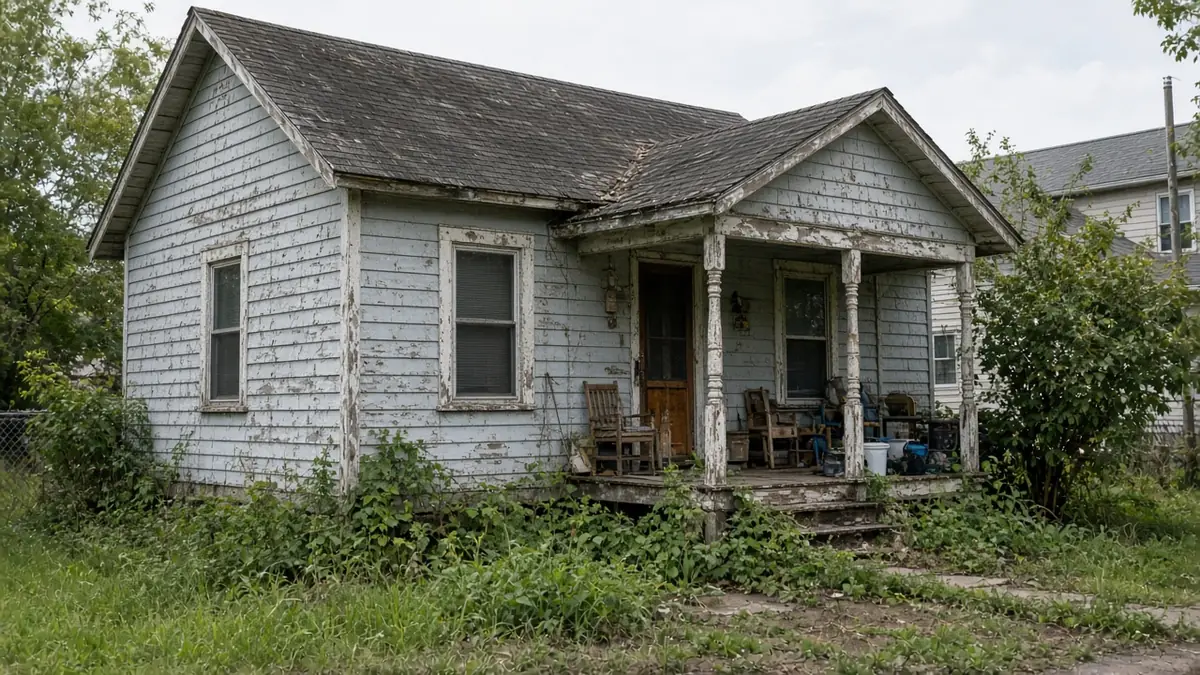
Picture a 1958 concrete-block ranch off Lenox Avenue on the Westside, or a 1920s frame bungalow in Springfield. The owner inherited it or moved out a while ago. The shingles are around 20 years old, there’s a brown ring on the bedroom ceiling, the panel is a Federal Pacific, and the bathroom still has original galvanized pipe. A listing agent says it’s “a great flip opportunity” and suggests replacing the roof first. The owner doesn’t have $15,000 or so for a roof, and hurricane season runs through November 30.
HomeCashOffer buys houses in Jacksonville as-is for cash, and we’ll tell you if listing would put more money in your pocket. For our wider Florida coverage, see Sell my house fast in Tampa and Jacksonville and our Jacksonville, FL city page.
Is your Jacksonville house insurable, or only fixable?
Insurability usually matters more than the repair list. In Jacksonville, start by asking whether a normal buyer could get homeowners insurance on the house as it stands today. If they can’t, most financed offers will fall apart late, often after weeks under contract.
Florida insurers routinely ask for two reports on older homes:
- A 4-point inspection covering roof, electrical, plumbing, and HVAC. This is where the deal-breakers in older Duval housing tend to appear: Federal Pacific Stab-Lok or Zinsco panels, fuses, cloth wiring, polybutylene supply lines from the late 1970s to mid-1990s, and galvanized or cast-iron drain lines in mid-century houses.
- A wind mitigation inspection, which documents roof-to-wall connections, roof shape, and opening protection. It doesn’t usually stop a sale, but it changes what the buyer will pay for insurance, and buyers factor premiums into their offer.
You can pay for a 4-point yourself before you list. It typically costs far less than any repair, and it tells you exactly what a buyer’s insurer will see. If it comes back clean except for cosmetic items, you’re probably a listing candidate. If it flags the roof or the panel, you know the conversation you’ll be having with every buyer.
Why does roof age matter so much when selling as-is in Jacksonville?
Roof age drives more Jacksonville as-is sales than any other single item, because many financed buyers cannot close without a homeowners policy. Since the 2022 special session on property insurance, section 627.7011(5), Florida Statutes, says an insurer can’t refuse to write or renew a homeowners policy solely because the roof is less than 15 years old. For a roof 15 years or older, the insurer must allow an inspection by an authorized inspector (at the homeowner’s expense) before requiring replacement, and it can’t refuse coverage solely for age if the inspection shows 5 or more years of useful life remaining. Insurers can still decline for a roof’s actual condition.
What that means for you as a seller:
- Roof under 15 years and in fair shape: usually not a barrier. List it or sell it; the roof isn’t your problem.
- Roof 15 years or older, or with visible damage: a financed buyer will likely need a roof inspection showing at least 5 years of life left, and may struggle to bind coverage if it doesn’t. Expect requests for a credit or a new roof, or a buyer who can’t close.
- Active leak or storm damage: disclose it. If you have an open insurance claim from a past storm, talk to your carrier and attorney before you sell, because a pending claim and a sale can collide.
Replacing the roof yourself can make sense if you have the cash and the rest of the house is solid; it can widen the buyer pool considerably. It makes less sense if the roof is only the first item on a long list.
Do I still have to disclose defects if I sell my Jacksonville house as-is?
Yes. Selling as-is means you will not make repairs; it does not erase Florida’s duty to disclose known material defects a buyer cannot easily see. Florida doesn’t have a single mandatory statewide seller disclosure form the way some states do. Instead, the duty comes from case law. In Johnson v. Davis, 480 So. 2d 625 (Fla. 1985), the Florida Supreme Court held that when a seller of a home knows of facts materially affecting its value that aren’t readily observable and aren’t known to the buyer, the seller must disclose them.
So an “as-is” contract protects you from having to repair, and the common Florida “AS IS” residential contract gives the buyer an inspection period and a right to cancel. It does not protect you if you knew about a roof leak, termite damage, a cracked slab, or past flooding and kept quiet. Practical habits:
- Write down what you actually know: past leaks, repairs, insurance claims, permits you didn’t pull.
- Don’t paint over water stains right before showing the house. Buyers and inspectors notice fresh paint on one ceiling patch.
- If you never lived there (an inherited house, for example), say so. You disclose what you know, and “I don’t know” is an honest answer when it’s true.
Separately, Florida law requires a radon disclosure statement in real estate contracts, and the standard contract forms include it.
Flood risk near the river, the creeks, and the beaches
Jacksonville is spread across the St. Johns River, its tributaries, and the coast. During Hurricane Irma in September 2017, the St. Johns River at the Main Street Bridge crested at a record 5.57 feet (NAVD88), beating the 1964 Hurricane Dora record, and the National Weather Service reported about 350 water rescues in Duval County, especially in Riverside, San Marco, and downtown. Tributaries backed up too. Flood risk here is not limited to beachfront.
Before you sell:
- Look up your property on FEMA’s Flood Map Service Center. If it’s in a Special Flood Hazard Area (zones starting with A or V), a buyer using a federally backed mortgage will have to carry flood insurance.
- If the house has ever taken water, gather what you have: dates, repairs, any FEMA or NFIP claim records. Disclose it.
- If you have an existing NFIP policy, ask your agent whether it can be assigned to the buyer. That can help a financed sale.
A cash buyer will still price flood risk into the offer, but won’t need a lender’s sign-off to close.
Do you have to give a flood disclosure when you sell a Jacksonville house as-is?
Short answer: Yes. Florida now requires a seller of residential property to give the buyer a written flood disclosure at or before the time the contract is signed, and an as-is contract doesn’t change that (Fla. Stat. § 689.302).
The form is short. It reminds the buyer that homeowners insurance doesn’t cover flood, then asks three things: whether you know of any flooding that damaged the house while you owned it, whether you filed a flood claim with any insurer (including the National Flood Insurance Program), and whether you got flood help such as FEMA assistance. “Flooding” includes rising river or tidal water, fast runoff from a creek or ditch, and standing water after heavy rain. For houses in San Marco, Ortega, or along the creeks that took water in Irma, your honest answers on that form matter more than any repair. Your title company or a Florida real estate attorney can confirm what else your sale needs; this is general information, not legal advice.
Can you keep your Save Our Homes savings after you sell your Jacksonville house?
Short answer: Often, yes, if you buy another Florida homestead in time. Florida’s portability rule lets you move up to $500,000 of the Save Our Homes difference you built up on your old homestead to a new one, as long as you set up the new homestead within the window in Fla. Stat. § 193.155(8), generally by January 1 of the third year after you left the old one.
That matters for long-time Duval County owners, because the assessed value on a house owned since the 2000s can be far below its market value. The buyer’s taxes reset to market value either way. You apply by filing Form DR-501T with your homestead application in the county where you’re moving. If you’re leaving Florida, there’s nothing to carry over, so factor the new state’s taxes into your plan.
If I sell my Jacksonville house this winter, who pays the Duval County tax bill?
Short answer: The 2026 bill is already out. Florida property taxes become due November 1 and don’t go delinquent until April 1 of the next year (section 197.333), and paying early earns a discount of 4% in November, 3% in December, 2% in January and 1% in February (section 197.162).
Most Florida sale contracts prorate the year’s taxes at closing, so you pay for the days you owned the house and the buyer pays for the rest. If you’ve already paid the 2026 bill, the buyer usually credits you for the rest of the year. If it’s unpaid, the title company usually pays the bill at closing and the proration splits it, so you’re charged only for your share. If you’d rather pay it yourself before closing to get the discount, ask the title company first so it isn’t paid twice. Check the tax line on every cash offer you compare, including ours. This is general information, not tax advice.
Can I sell a Jacksonville house with code enforcement or nuisance liens?
Short answer: Yes. Code liens are usually paid from the sale proceeds at closing, but get the numbers early. Jacksonville’s Municipal Code Compliance Division says nuisance and demolition lien searches, administrative and magistrate fines, citation payoff amounts and case files all require a public records request through records.coj.net, with both the address and the RE number (City of Jacksonville MCCD).
That request can take a while, so start it as soon as you decide to sell, especially on a vacant or inherited house that’s been mowed or boarded up by the city. The city also has a Lien Reduction Program for nuisance and demolition liens, but it’s built for owners who fix the property: only the owner of record can apply, taxes must be paid, the property must be in full compliance, and Tier 2 applications have to be filed after the work is finished but before the sale. If you’re selling as-is, you probably won’t qualify after you sign, so ask about a reduction before you go under contract. HomeCashOffer’s title company orders payoffs and pays them at closing. This is general information, not legal advice.
Will buyers see a different property tax estimate on Jacksonville listings starting in 2027?
Short answer: Yes. Beginning February 1, 2027, section 689.261(3)(b) requires listing platforms to show estimated property taxes for Florida homes based on what a buyer would pay at the listing price and current millage rates. The current owner’s taxes can only appear as historical information.
For a long-time Duval County homestead owner, that estimate will usually look much higher than your own bill, because a buyer’s assessment resets after the sale (see the Save Our Homes section above). It doesn’t change what you owe. It changes what buyers see first, and a high number may thin out retail interest in an older house that already has roof or insurance issues. Every Florida residential contract already has to include or attach the Property Tax Disclosure Summary (section 689.261(1)). Cash buyers figure their own taxes after closing, so the new listing estimate doesn’t affect a direct sale. This is general information, not tax advice.
Jacksonville housing stock: where as-is problems tend to show up
Duval County is consolidated city-county and huge, so “Jacksonville house” covers very different buildings:
- Springfield, Riverside, Avondale, and parts of Murray Hill: older frame homes, many from the early 1900s through the 1940s. Expect older wiring, pier foundations, and in the historic districts, design review from the city’s Historic Preservation Commission for exterior changes. That review can slow down a seller who wants to replace windows or siding before listing.
- Westside, Northside, and Arlington: lots of 1950s to 1970s concrete-block ranches. Block walls hold up, but original plumbing, panels, and flat or low-slope additions are common 4-point issues.
- Mandarin, Southside, and the Beaches: generally newer, but 1980s and 1990s houses here are prime territory for polybutylene plumbing and roofs past their second decade.
Termites deserve a mention too. North Florida’s warm, humid climate is hard on wood framing, and a lender may require a wood-destroying organism (WDO) inspection. Old damage that was treated is often fine if documented; active damage becomes a negotiation.
Compare real net proceeds, not just price
An as-is cash offer will usually be lower than a retail list price. That’s normal and you should expect it. What matters is what you keep. Lay the two paths side by side:
Listing the house
- Agent commission (negotiable; ask your agent for the actual figure)
- Repairs or credits the buyer’s inspection and insurer demand
- Months of mortgage, property tax, insurance, utilities, and lawn care while it sits
- Risk the buyer’s insurance or financing falls through and you start over
Selling as-is for cash
- No repairs, no showings, no lender or insurer approval needed for the buyer to close
- Closing date you choose, often within a couple of weeks once title is clear
- A lower price, because the buyer is taking on the repairs and the risk
Costs that apply either way: Florida documentary stamp tax on the deed is $0.70 per $100 of sale price outside Miami-Dade, and sellers customarily pay it. Your Duval County property taxes are prorated at closing, and if you had a homestead exemption, it ends with the sale. Title insurance and closing fees vary by contract.
When we’d tell you not to sell to us
- The house is insurable and only needs paint, flooring, and landscaping.
- You have a roof under 15 years old, an updated panel, and modern plumbing.
- You can comfortably carry the house for three to six months and want the highest price.
In those cases a good local listing agent will likely net you more, and we’ll say so.
Where cash fits
Cash tends to make sense when the 4-point or the roof would block a buyer’s insurance, when the house took water and you don’t want to manage the repair, when you’re out of state and can’t oversee contractors, or when the next storm season worries you more than the price difference. We look at the house as it is, make an offer, and you decide.
How a sale with HomeCashOffer works
- Call (405) 622-8705 or request an offer online. Tell us what you know about the roof, systems, and any water history.
- We’ll look at the house, in person or with a local partner, and give you a written cash offer.
- If you accept, a Florida title company handles the closing. You pick the date.
HomeCashOffer has bought houses since 2019. Our mailing address is 3000 W Memorial Rd, Ste 123 Unit 308, Oklahoma City, OK 73120, and we buy in Jacksonville and across Florida.
Related reading: Selling as-is vs fixing up, Cash offer vs listing with an agent, and Selling a house with liens or back taxes in Tampa.
This article is general information, not legal or insurance advice. Verify disclosure duties, insurance requirements, and flood obligations with a Florida real estate attorney, a licensed insurance agent, and your title company.
Sell your house fast in these markets
Local cash offer pages—or start with a nationwide request.
Frequently asked questions
If I sell my Jacksonville house 'as-is,' do I still have to tell buyers about problems?
Yes, for problems you know about. In Johnson v. Davis (1985), the Florida Supreme Court held that a seller of a home must disclose known facts that materially affect its value and aren't readily observable to the buyer. An 'as-is' clause means you won't make repairs; it doesn't let you hide a known roof leak, foundation crack, or past flood. Ask a Florida real estate attorney if you're unsure what counts.
Why does my roof's age matter so much when selling in Jacksonville?
Because most buyers need homeowners insurance to close a mortgage, and Florida insurers look hard at roofs. Under section 627.7011(5), Florida Statutes, added in the 2022 special session, an insurer can't refuse to write or renew a homeowners policy solely because the roof is less than 15 years old. For a roof 15 years or older, the insurer must let the homeowner get an inspection first, and it can't refuse coverage solely for roof age if that inspection shows at least 5 years of useful life left. If your roof is near the end of its life, a financed buyer may not be able to get a policy, which narrows your buyer pool.
What is a 4-point inspection and will my buyer need one?
A 4-point inspection looks at the roof, electrical, plumbing, and HVAC. Florida insurers commonly require one for older homes before writing a policy. Items like a Federal Pacific or Zinsco panel, polybutylene supply lines, or galvanized plumbing often show up in older Jacksonville houses and can stop a policy. A cash buyer who doesn't need a lender or a new policy at closing isn't held up by that report.
My house is in a flood zone near the St. Johns River. Can I still sell it as-is?
Yes. Flood zone status affects what a financed buyer must carry: federally backed mortgages require flood insurance in high-risk zones. You can look up your zone on FEMA's Flood Map Service Center. If the house took water before, disclose it. Cash buyers price the risk in rather than walking away over a lender requirement.
Who pays documentary stamp tax when I sell in Duval County?
In Florida the seller customarily pays documentary stamp tax on the deed, at $0.70 per $100 of the sale price outside Miami-Dade. Who pays is negotiable in the contract. Your title company will show it on the settlement statement.
When should I NOT sell my Jacksonville house as-is for cash?
When the repairs are cosmetic, the roof and systems are insurable, and you have time to list. A house in Riverside, San Marco, or Mandarin that only needs paint and carpet usually nets more on the open market. Cash makes the most sense when the problem would block financing or insurance, or when you can't carry the house for months.
Do I have to give a flood disclosure when I sell my Jacksonville house as-is?
Yes. Fla. Stat. 689.302 requires sellers of residential property to give the buyer a flood disclosure at or before signing the contract, stating whether you know of flood damage during your ownership, filed a flood insurance claim, or received flood assistance such as FEMA aid.
Can I keep my Save Our Homes savings if I sell my Jacksonville homestead?
Often. Florida portability lets you move up to $500,000 of your Save Our Homes benefit to a new Florida homestead if you establish it within the window in Fla. Stat. 193.155(8), generally by January 1 of the third year after leaving the old one. File Form DR-501T with the new county's property appraiser.
Is this legal or insurance advice?
No. It's general information for Jacksonville-area homeowners. Disclosure duties, insurance underwriting, and flood requirements depend on your facts and change over time, so check with a Florida real estate attorney, a licensed insurance agent, and your title company.
If I sell my Jacksonville house this winter, who pays the Duval County tax bill?
Florida property taxes become due November 1 and go delinquent April 1 of the next year (section 197.333), with early-payment discounts of 4% in November down to 1% in February (section 197.162). Most Florida contracts prorate the year's tax at closing, so you pay for the days you owned the house. If the bill is unpaid, it is usually paid at closing and split by the proration.
Can I sell a Jacksonville house with code enforcement or nuisance liens?
Yes. Liens are usually paid from the sale proceeds at closing. Jacksonville's Municipal Code Compliance Division handles nuisance and demolition lien searches, magistrate fines and citation payoff amounts through a public records request at records.coj.net, so include the address and the RE number and request it early.
Will buyers see a different property tax estimate on Jacksonville listings starting in 2027?
Yes. Beginning February 1, 2027, section 689.261(3)(b) of the Florida Statutes requires listing platforms to show estimated taxes based on what a buyer would pay at the listing price, not the current owner's taxes. Long-time homestead owners should expect the estimate on a listing to look higher than their own bill.
Ready to see what a cash offer looks like?
No repairs required. No agent commissions when you sell to us. No obligation to accept.
Request your no-obligation cash offer
Prefer a dedicated form? Visit Get a Cash Offer Today.
Get My Cash Offer
Share your name, phone, and property address. No obligation. We will follow up shortly.