
Can You Sell a House With Code Violations in Las Vegas? Nevada Disclosure, Liens, and Amnesty in 2026
Yes, but Nevada makes you disclose unpermitted work you know about. City vs. Clark County code rules, NRS 113 disclosure and treble damages, amnesty permits, abatement liens, October 2026 market data, Clark County tax deadlines, and when to fix first. (405) 622-8705.
Short answer: Yes. You can sell a Las Vegas house with code violations, either by fixing the cheap ones first or by selling as-is to a buyer who prices the problem in. Before you decide, pin down three things: which agency wrote you up (the City of Las Vegas, Clark County, Henderson, North Las Vegas, or your HOA), whether anything has been recorded against the property, and whether the violation is a $350 problem or a $35,000 one. Nevada requires you to disclose unpermitted work you know about, and a buyer who finds out later can sue for three times the repair cost, so selling quietly isn’t a safe option.
If you are ready to price an as-is sale, start with sell my house fast in Las Vegas or, north of the city line, North Las Vegas cash home buyers.
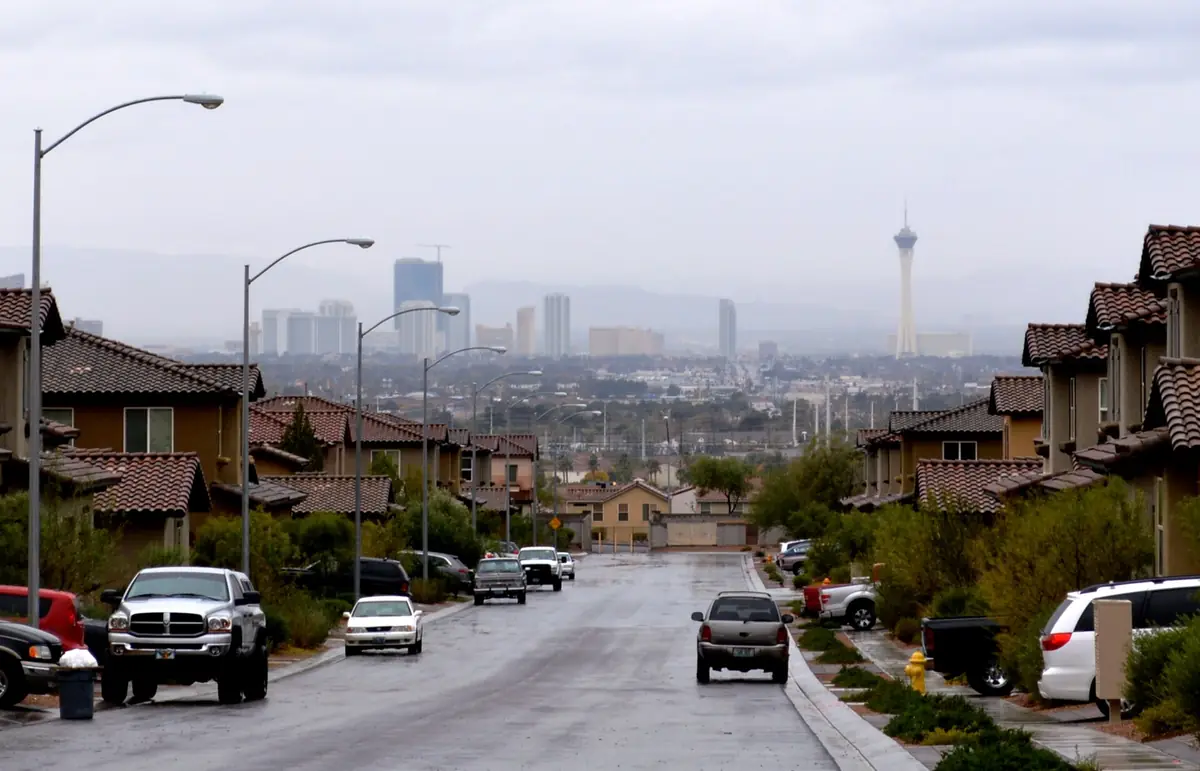

Last updated November 13, 2026, with Redfin market data for the three months ending October 2026, Freddie Mac rates as of November 12, 2026, the Clark County Treasurer’s 2026-2027 installment dates and penalties, the City’s online fine-payment process, and direct links to the Nevada statutes and City programs.
Picture this. A retired owner moved to Boise to be near the grandkids and kept his 1960s single-story in Charleston Heights as a rental. The tenant moved out in June. By August the pool had turned green, the yard was dead, and a neighbor called the City. A Code Enforcement officer posted a notice of violation, and while looking over the property he also noticed something the owner had stopped thinking about years ago: the previous owner had turned the garage into a bedroom, and there’s no permit for it. Now there’s a reinspection date, the owner is more than 500 miles away, and he isn’t sure whether to fly down and fix it, hire someone, or just sell.
HomeCashOffer buys Las Vegas houses with violations as-is, and this guide also says when that’s the wrong move. For a general overview of selling in Southern Nevada, see Sell my house fast in Las Vegas and our Las Vegas cash buyer page.
Disclaimer: HomeCashOffer is not a law firm, and nothing here is legal or tax advice; it’s general information. City and county codes, fees, and Nevada statutes change. Confirm anything that matters with a Nevada attorney, your title company, and the agency on your notice.
Who actually sent my violation notice?
Read the letterhead: it will be the City of Las Vegas, Clark County, Henderson, North Las Vegas, or your HOA. This matters more in Las Vegas than almost anywhere else, because a “Las Vegas” address can sit in five different code systems.
- City of Las Vegas. City Code Enforcement covers neighborhoods like Charleston Heights, Huntridge, the Scotch 80s, Centennial Hills, and most of Summerlin, and permits go through the City’s Building & Safety division.
- Unincorporated Clark County. Paradise (which includes most of the Strip), Spring Valley, Enterprise, Sunrise Manor, Winchester, Whitney, and Summerlin South aren’t in any city. They fall under County Code Enforcement and the Clark County Department of Building & Fire Prevention.
- Henderson and North Las Vegas. Each is its own city with its own code and enforcement staff. If your house is in Green Valley or Aliante, the City of Las Vegas rules below may not apply. See our Henderson and North Las Vegas pages.
- Your HOA. Many of the valley’s stucco-and-tile tract homes built since the 1990s sit in master-planned communities with associations. An HOA violation letter isn’t a government code case, but it follows its own Nevada rules and can follow you to the closing table.
The rules differ in small ways. In the City, a block wall over 30 inches high needs a permit. In unincorporated Clark County, the County’s own guidance says residential perimeter block walls over 24 inches need one. Read the letterhead first.
What happens if I ignore a City of Las Vegas notice?
It gets more expensive in steps, then attaches to the house as a lien that can be collected like property tax.
Under Chapter 9.04 of the Las Vegas Municipal Code, an officer who finds a public nuisance can issue a notice of violation to the owner and set a reinspection date. If the work isn’t done by then, the City charges a $120 initial reinspection fee, then $180 an hour (one-hour minimum) for each additional inspection until the property passes. The City’s green pool flyer lists the cost of not complying on a neglected pool as a $350 pumping fee plus the $120 failed-inspection fee.
If the owner still doesn’t act, the City can abate the problem itself, hiring someone to clear the yard, pump the pool, or board the house, and then assess the cost, reinspection fees, and interest against the property. That assessment is recorded with the Clark County Recorder and becomes a lien. Nevada law (NRS 268.4122) lets a city make those costs a special assessment collected the same way as county property taxes, with the same penalties and the same sale procedure if it goes delinquent. In other words, an ignored weed notice can end up on your tax bill. If you already have a case number, the City’s Code Enforcement Division lets you look up the fees and pay online at lasvegasnevada.gov/paycase; the City says payments take about 24 hours to post (City of Las Vegas online fine-payment instructions). For questions, the division is at 702-229-6615 (City of Las Vegas Code Enforcement).
How is Clark County code enforcement different?
The County’s fines turn into liens faster, and it treats old unpermitted structures as violations no matter their age. The County says it starts with education, inspection, and notices, then can move to administrative citations, civil penalties, abatement, or prosecution in the Justice Court. Two County details matter. First, under the County’s administrative citation rules, an unpaid fine becomes a lien on the property after 15 days unless it’s appealed or cancelled, and it can be recorded or placed on the tax roll as a special assessment under NRS 244.3605. The County warns that unpaid assessments can lead to the property being sold after three years. Second, the County’s building violations page says accessory buildings, casitas, carports, shade structures, covered patios, and room additions built without valid permits are illegal regardless of the age of the structures. A patio cover a previous owner added in 2004 is still a violation in 2026.
Can I sell with an open case, and what will the buyer see?
Yes. An open case doesn’t block a sale; the buyer sees recorded liens on the title report and the case itself through your disclosures. Nevada closings run through a title and escrow company. Early on, the title company pulls a preliminary title report showing recorded liens, including City abatement liens and recorded County citation liens. Those get paid out of escrow from your proceeds, the same way a mortgage payoff does. An open case that hasn’t turned into a lien yet won’t necessarily show up on title, but it still exists, and your disclosure obligations still apply.
Pull these together before you call anyone:
- The notice or citation, with the case number. City cases can be looked up and paid online by case number.
- Any photos the officer attached and the reinspection date.
- Your permit history for the address, from the City or County, so you know what was and wasn’t permitted.
- Every HOA letter, plus the HOA’s current account statement.
- Your mortgage statement, so escrow can order a payoff.
If the reinspection date is close and the fix is quick, like pumping a pool or hauling debris, do it even if you plan to sell. Stopping the fee clock is almost always worth a few hundred dollars.
Does Nevada make me disclose code violations and unpermitted work?
Yes, if you know about them, and the buyer can’t waive the form.
NRS 113.130 requires most sellers of residential property to fill out the Real Estate Division’s Seller’s Real Property Disclosure form and serve it on the buyer at least 10 days before the property is conveyed. The seller fills it out personally; the listing agent isn’t allowed to do it for them. The form asks whether you’re aware of construction, modifications, alterations, or repairs made without required state, city, or county building permits, and a yes requires further explanation. It also asks about zoning violations.
Hiding something is costly. Under NRS 113.150, if a seller knew about a defect and conveyed the property without disclosing it, the buyer may recover three times the cost of repair or replacement, plus court costs and attorney’s fees. The buyer has until 1 year after discovering the defect or 2 years after the sale, whichever is later, to sue.
If you find a new problem after serving the form, or a disclosed one gets worse, you must tell the buyer in writing before closing. That late notice gives the buyer a choice under the same statute: close and accept the defect, or rescind with a written, notarized notice served within 4 working days. A seller who never serves the form at all can lose the deal any time before closing. Some sales are exempt from the form, including sales between co-owners or close relatives and sales by a personal representative, trustee, or other fiduciary handling property for someone who has died or is incapacitated.
So for our Charleston Heights owner, the unpermitted garage bedroom goes on the form whether he lists it with an agent or sells to us.
Can an HOA fine stop or follow a Las Vegas sale?
An HOA fine won’t usually stop a sale, but it will follow you to closing through the resale package and get paid from escrow. Before an HOA board can fine you, NRS 116.31031 requires written notice that describes the violation in detail, says how to fix it, states the fine, gives a hearing date, and includes a clear photo when the problem is physical, like dead landscaping or an unapproved paint color. For violations that don’t threaten health or safety, a fine can’t exceed $100 per violation or $1,000 per hearing. If the violation isn’t cured within 14 days after a fine, the board can treat it as continuing and add a fine for each 7-day period.
Under NRS 116.31162, an association generally can’t foreclose on your house over fines, unless the violation poses an imminent threat to residents’ health, safety, or welfare or involves a missed construction schedule. Unpaid regular assessments are a different story. Our Las Vegas foreclosure data page walks through the HOA assessment-foreclosure steps and the Clark County trustee-sale numbers.
When you sell, NRS 116.4109 requires you to give the buyer a resale package that includes a statement of any unpaid obligations, including fines and penalties, and the buyer can cancel within five calendar days of receiving it. Unpaid fines usually get paid from escrow at closing.
Should I fix the violations or sell as-is?
Fix the cheap, fast ones; get unpermitted work inspected before deciding; and price both paths for anything big. Cheap and fast: fix them. Weeds, trash, a dead front yard, a green pool, an inoperable car in the driveway. Taking an as-is discount over a $350 pool pump-out doesn’t make sense. Hire a local pool service and a yard crew, get receipts, and ask the officer to close the case.
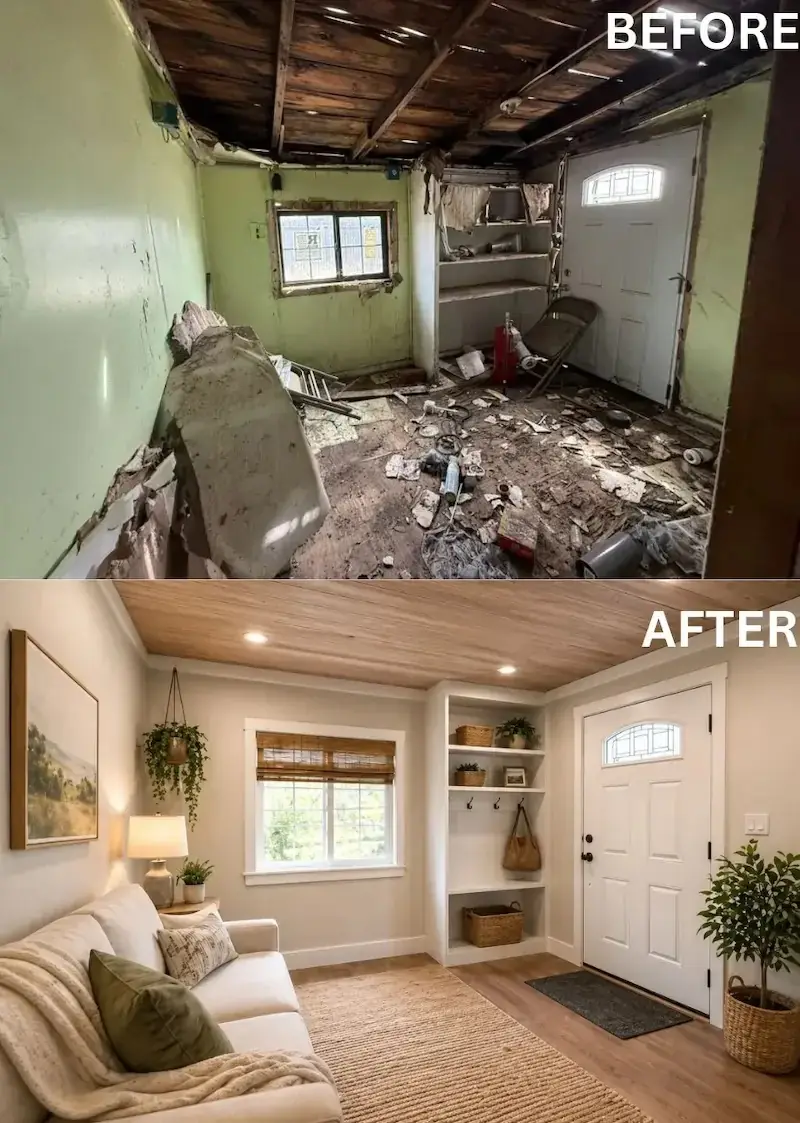
Unpermitted work: get it looked at before you decide. This is where the money is. The City of Las Vegas runs a year-round amnesty program (City of Las Vegas Building & Safety permits page) that lets homeowners self-disclose non-permitted or non-code-compliant work without penalties on the plan review and permit fees. Amnesty doesn’t mean approval, though. You still pay standard fees and still have to bring the work up to code. The City also offers a Building Investigation inspection for unpermitted structures at a flat $176 residential fee. The inspector tells you what it will take: no plans, partial plans, a full set of plans, removal of the work, or a variance through Planning. For a garage conversion like the one in Charleston Heights, the City’s guideline addresses how the garage door opening is filled in and the water heater setup, and the inspector may require access holes to see concealed work. Finding out costs $176. Guessing could cost a lot more.
Big-ticket problems: price both paths. If legalizing means engineered plans, opening walls, or tearing out a patio cover that violates setbacks, and you’re managing it from another state through the summer, an as-is sale may leave you with more money and far less stress. For the general tradeoff, see Sell as-is vs. fixing up and how investors value heavy repair work.
What is the Las Vegas housing market doing in fall 2026?
It’s slower and more price-sensitive than a year or two ago, which makes condition problems harder to sell around:
- Prices are roughly flat. Redfin puts the Las Vegas median sale price at $448,188 for the three months ending October 2026, up just 0.7% year over year, with 1,975 homes sold in October, down 6.5% from a year earlier (Redfin Las Vegas housing market, October 2026).
- Buyers negotiate. The median home took 59 days to sell (56 a year earlier), the average sale-to-list ratio was 97.8%, only 16.0% of homes sold above list, and 42.0% of listings had a price drop (same Redfin page).
- Loans cost more than a year ago. Freddie Mac’s Primary Mortgage Market Survey put the 30-year fixed rate at 7.11% as of November 12, 2026, down from 7.18% a week earlier but up from 6.24% a year earlier. A financed buyer’s appraiser and lender are the ones most likely to flag an unpermitted garage conversion.
- Owner-occupied homes are worth a bit less than the sale median. The Census Bureau’s 2020–2024 American Community Survey puts the median value of owner-occupied homes in the City of Las Vegas at $427,900, with median monthly owner costs of $1,933 for homes with a mortgage. About 56.6% of homes in the city are owner-occupied (U.S. Census Bureau QuickFacts, Las Vegas city).
In a market where more than four in ten listings take a price cut, a house with a green pool, an open case, or a bedroom without a permit gives financed buyers an easy reason to ask for credits or move on. That doesn’t mean you should sell as-is. It means you should price the fixes honestly.
Will I net more fixing violations first or selling as-is?
It depends on the violation: cheap fixes usually pay for themselves, while big legalization jobs can eat the gap between a retail price and a cash offer. We won’t guess at your numbers, but here’s how to run them. With the fix-then-list path, you start with the after-repair sale price and subtract the mortgage payoff, permit and plan costs, the cost of the work itself, months of mortgage, insurance, utilities, HOA dues, and pool and yard upkeep while it’s done, the listing commission and closing costs, and Clark County’s real property transfer tax. The County Recorder lists that tax at $2.55 for each $500 of value, and the contract sets who pays it. Any fines and liens that are still open come out of your proceeds too. So do unpaid property taxes. The Clark County Treasurer’s 2026-2027 schedule puts the next installment due on Monday, January 4, 2027 (last day without penalty January 14) and the last one on March 1, 2027. The Treasurer’s penalty table adds 4% to one late installment and more for each additional one, and a City abatement assessment placed on the tax roll is collected the same way. Escrow will prorate and pay what’s owed, but a fix-then-list plan that runs past January or March carries those dates with it.
With the as-is path, you start with the cash price and subtract the mortgage payoff, recorded liens and fines paid through escrow, and your share of closing costs and transfer tax. Then weigh the gap between them against how many months the repair route would tie you up. If paying off liens is a big part of your picture, our guide to selling with liens and back taxes explains how payoffs work at closing, and What to expect from a cash offer covers what a fair offer should spell out.
When should you not sell a Las Vegas house with violations for cash?
When the problem is cheap to fix or you’re staying put. Specifically:
- The only problems are cosmetic or seasonal. A green pool, dead turf, and junk in the side yard are a weekend and a few hundred dollars, not a reason to take a discount.
- Amnesty plus a modest fix gets the addition legal. If the $176 investigation says partial plans and a few corrections, a legal extra bedroom may be worth more than any cash buyer will pay for the problem.
- The issue is an HOA fine you can contest. If the notice skipped the required photo or hearing, challenge it before letting it shape your sale.
- You plan to stay. If you’re not moving, fix it and keep the house.
Long-distance landlords like the owner in our example may also want our guide for tired landlords.
How does a HomeCashOffer purchase work with open violations?
You send the notice, we give a written as-is offer, and a Nevada escrow company pays the liens at closing. Step by step:
- Reach us at (405) 622-8705 or request a cash offer online, and send the notice, the case number, and any HOA letters. You don’t need to clean anything up first.
- We look at the house as it stands, including the converted garage, the patio cover, or the pool, and give you a written offer that says which violations, fines, and liens it accounts for.
- If you accept, a Nevada title and escrow company opens escrow, pulls the preliminary title report, and pays the mortgage and any recorded liens from the proceeds.
- You pick when escrow closes. When title is clean, that can be as soon as 7 days, and out-of-state sellers can often sign with a notary where they live.
An offer costs nothing, and you can say no. Call (405) 622-8705; we answer 24 hours a day, 7 days a week.
Sell your house fast in these markets
Local cash offer pages—or start with a nationwide request.
Frequently asked questions
Can I sell a Las Vegas house with an open Code Enforcement case?
Yes. An open case doesn't block a sale. What changes is what the buyer will ask for: the case number, the notice, and a plan for any fees, fines, or abatement costs. Anything already recorded against the property, such as an abatement lien, shows up on the title company's preliminary report and is normally paid out of escrow at closing. A buyer who takes the house as-is can also take on the job of fixing the violation, and the price reflects that.
Do I have to disclose unpermitted work when I sell a house in Nevada?
If you know about it, yes. Nevada's Seller's Real Property Disclosure form asks directly whether you're aware of any construction, modification, alteration, or repair made without required state, city, or county building permits, and a yes requires more explanation. Under NRS 113.130 the form has to be served at least 10 days before the property is conveyed, and the buyer can't waive that. Some sellers are exempt, including certain fiduciaries such as a personal representative selling for a deceased owner.
What happens if I sell without disclosing a defect I knew about?
Under NRS 113.150, if a seller conveys residential property without disclosing a defect they knew about, the buyer may be entitled to recover three times the cost to repair or replace it, plus court costs and reasonable attorney's fees. The buyer generally has until 1 year after discovering the defect or 2 years after the sale, whichever is later, to file. That's a strong reason to disclose an unpermitted garage conversion or patio cover rather than hope nobody notices.
Is there a way to legalize an unpermitted addition in Las Vegas without penalties?
In the City of Las Vegas, yes, partly. Building & Safety runs a year-round amnesty program that lets homeowners self-disclose non-permitted or non-code-compliant work without penalties on the required plan review and permit fees. You still pay the normal fees and still have to bring the work up to code. The City also offers a Building Investigation inspection for unpermitted structures for a flat $176 residential fee, which tells you whether you need plans, partial plans, removal, or a variance.
Can my HOA foreclose on my house over violation fines in Nevada?
Generally not. NRS 116.31162 says an association may not foreclose its lien by sale based on a fine or penalty for violating the governing documents, unless the violation poses an imminent threat of a substantial adverse effect on residents' health, safety, or welfare, or the penalty is for missing a required construction schedule. Unpaid assessments are a different matter, and fines still show up in the resale package a buyer receives.
Is my house in the City of Las Vegas or unincorporated Clark County?
A Las Vegas mailing address doesn't tell you. Large areas with Las Vegas addresses, including Paradise, Spring Valley, Enterprise, and Summerlin South, are unincorporated Clark County, while neighborhoods such as Charleston Heights and Huntridge are inside the City. The notice itself names the agency that sent it, and the City's permit pages tell you to confirm you're within city jurisdiction before applying.
How do I look up or pay a City of Las Vegas Code Enforcement fine before I sell?
Use the case number on your notice. The City's Code Enforcement Division takes payments online at lasvegasnevada.gov/paycase: enter a case number in the CE-000000 or CE19-000000 format and the site shows the address, the fees, and the total due. The City says to allow 24 hours for a payment to post. For questions, the division's number is 702-229-6615. Paying a fine doesn't close the case by itself; the violation still has to pass reinspection.
Can a Nevada buyer back out after I disclose a violation late?
Yes. Under NRS 113.150, if you tell the buyer in writing about a defect before closing and the contract didn't cap repair costs for it, the buyer can either close and accept the defect or rescind. A rescission has to be written, notarized, and served within 4 working days after the buyer learns of the defect. If the disclosure form was never served at all, the buyer can rescind any time before conveyance. That's one more reason to put a known violation on the form up front.
When is the next Clark County property tax installment due if I'm selling this winter?
For the 2026-2027 fiscal year, the Clark County Treasurer lists the third installment as due Monday, January 4, 2027, with January 14, 2027 the last day to pay without penalty, and the fourth as due Monday, March 1, 2027. One late installment adds a 4% penalty. If you sell, escrow prorates the taxes and pays anything unpaid at closing, and a buyer owes taxes not paid as of the close of escrow. Code abatement costs placed on the tax roll follow the same collection rules, so check your parcel's balance before you set a price.
Is the Las Vegas market strong enough to list a house with violations instead of selling as-is?
It's a slower market than it was. Redfin reports a Las Vegas median sale price of $448,188 for the three months ending October 2026, up 0.7% from a year earlier, with a median of 59 days on market, homes selling for 97.8% of list on average, and 42.0% of listings taking a price cut. A house with an open case or an unpermitted addition is competing with clean listings in that market, so compare a realistic fix-and-list net with a written as-is number.
Will HomeCashOffer buy a Las Vegas house with violations as-is?
Yes. HomeCashOffer buys houses in Las Vegas, Henderson, North Las Vegas, and unincorporated Clark County with open Code Enforcement cases, unpermitted additions, HOA violations, green pools, and recorded abatement liens. We give a written, no-obligation offer, and a Nevada title and escrow company handles the closing and pays recorded liens from the proceeds. Call (405) 622-8705.
Ready to see what a cash offer looks like?
No repairs required. No agent commissions when you sell to us. No obligation to accept.
Request your no-obligation cash offer
Prefer a dedicated form? Visit Get a Cash Offer Today.
Get My Cash Offer
Share your name, phone, and property address. No obligation. We will follow up shortly.